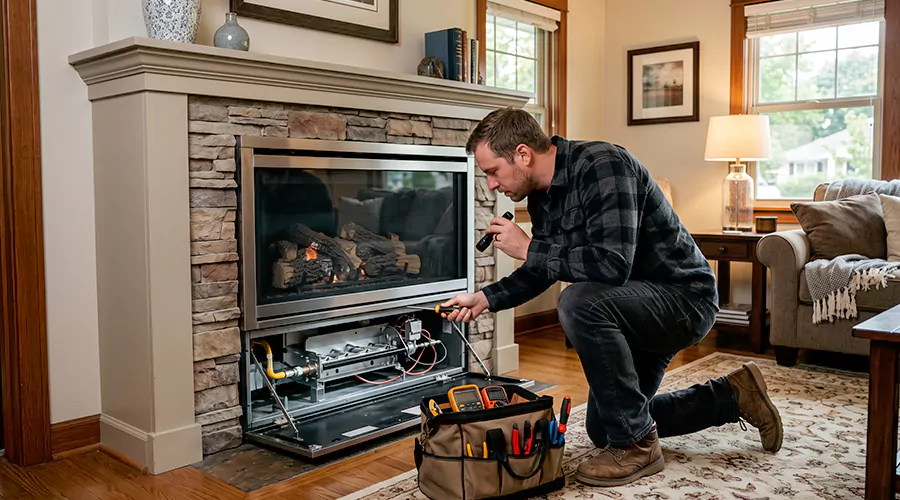
What Causes a Gas Fireplace to Keep Shutting Off?
Is your gas fireplace turning off unexpectedly? Explore common causes, troubleshooting steps, repair costs, and ways to restore dependable fireplace performance.




Based on 500+ Reviews

Proudly American
Owned & Operated

A gas fireplace that keeps shutting off can be frustrating and may indicate a problem with the ignition system, gas supply, airflow, or safety components. A properly functioning gas fireplace should ignite reliably and continue operating without frequent interruptions. If the existing unit requires replacement, gas fireplace installation can provide a reliable and efficient heating solution.
When a gas fireplace repeatedly turns off, it is often because a built-in safety feature is detecting a problem and stopping the fireplace to prevent unsafe operation.
Understanding the common causes of a gas fireplace shutting off can help homeowners identify the issue and determine when professional service is needed.
A gas fireplace may repeatedly shut off because of:
The pilot light provides the flame needed to ignite and maintain the fireplace.
If the pilot light is weak or dirty, it may not generate enough heat to keep the safety system activated. If the issue is related to an older unit or worn components, old fireplace repair may help restore proper operation.
Possible causes include:
Signs of a pilot light problem include:
Cleaning the pilot assembly may help restore proper operation.
The thermocouple is a safety component that detects whether the pilot flame is burning.
If the thermocouple does not sense enough heat, it may shut off the gas supply as a safety measure.
A failing thermocouple can cause:
Replacing a damaged thermocouple may be necessary.
Many modern gas fireplaces use a thermopile to generate electricity for the gas valve and control system.
A weak thermopile may cause:
Thermopile issues are common in fireplaces that are older or heavily used.
A gas fireplace requires a steady supply of fuel to operate correctly.
Problems with gas supply may include:
Signs of gas supply issues include:
Gas supply problems should be inspected by a qualified professional.
Gas fireplaces require proper ventilation to remove combustion gases and maintain airflow.
Blocked vents can cause the fireplace safety system to shut the unit down.
Possible causes include:
Signs of venting problems include:
Some gas fireplaces have safety controls that shut the unit off if temperatures become too high.
Overheating may occur because of:
Allowing proper airflow around the fireplace can help prevent overheating.
The burner controls how gas is distributed and burned.
Dust and debris can affect burner performance and cause:
Regular cleaning and maintenance can help keep burners operating correctly.
The gas valve controls the flow of gas into the fireplace.
A damaged gas valve may cause:
Because gas valves are critical safety components, they should be inspected and repaired by qualified professionals.
Many gas fireplaces use electronic controls or remotes.
Problems may occur because of:
If the fireplace shuts off when using a remote, checking the batteries and control settings may help identify the problem.
Electronic gas fireplaces rely on electrical components to operate.
Possible electrical issues include:
Electrical problems may cause random shutdowns or failure to start.
Airflow issues can affect gas fireplace operation.
Problems may include:
Draft problems may cause the fireplace safety system to shut down the unit.
A gas fireplace that was not installed correctly may experience repeated shutdowns.
Possible installation issues include:
Installation problems often require professional evaluation.
Homeowners can check some basic issues:
Look for:
Make sure:
Inspect accessible vent openings for debris.
If the fireplace uses a remote, weak batteries may affect operation.
Make sure furniture, decorations, or other objects are not blocking airflow.
Yes. Gas fireplaces include safety systems designed to stop operation when they detect problems.
Safety shutdowns may occur because of:
A shutdown is often a protective response rather than the actual problem itself.
Repair costs depend on the cause.
Common repairs include:
| Repair | Average Cost Range |
|---|---|
| Pilot cleaning | $100–$250 |
| Thermocouple replacement | $100–$300 |
| Thermopile replacement | $150–$400 |
| Ignition repair | $150–$400 |
| Gas valve replacement | $300–$800 |
| Vent repair | $200–$1,000 |
The exact cost depends on the fireplace type, parts, and repair complexity.
Professional service is recommended when:
Gas fireplace systems require proper testing to ensure safe operation.
Regular maintenance can help prevent unexpected shutdowns.
Helpful steps include:
Preventive maintenance helps identify issues before they cause failures.
A gas fireplace that keeps shutting off is usually caused by problems with the pilot light, thermocouple, thermopile, gas supply, ventilation, burner system, or safety controls.
While some issues may be simple to correct, repeated shutdowns should not be ignored because they may indicate a problem affecting safe operation.
Regular inspections, proper cleaning, and timely repairs can help keep a gas fireplace running efficiently and reliably.
Common causes include a weak pilot light, faulty thermocouple, overheating, or venting problems.
A gas fireplace may keep going out because of pilot issues, gas supply problems, dirty burners, or faulty safety components.
Yes. Dirt or debris can weaken the pilot flame and cause the safety system to turn off the fireplace.
Possible causes include weak batteries, receiver problems, or control system issues.
Some fireplaces have automatic safety shutoffs, but frequent shutdowns usually indicate a problem that needs inspection.
Basic maintenance may be possible, but gas components and safety systems should be handled by qualified professionals.
Is your gas fireplace turning off unexpectedly? Explore common causes, troubleshooting steps, repair costs, and ways to restore dependable fireplace performance.
